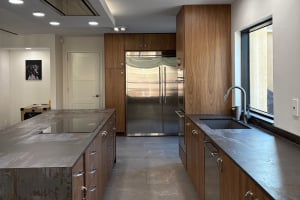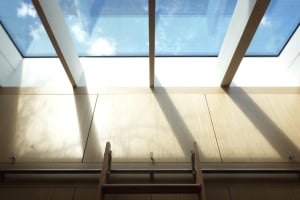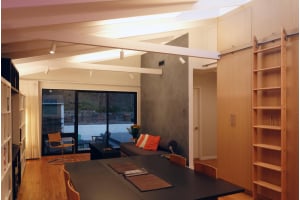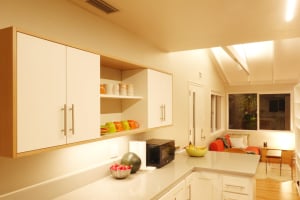
Mid century modern design has a documented preference for certain materials, and the preference is not arbitrary. The style emerged from a clear set of ideas: honest design, functional construction, and materials that looked like what they were. This is why real wood, glass, and flat matte finishes dominate the mid century modern material palette, and why simulated surfaces and decorative finishes sit outside it.
Understanding the materials helps with sourcing correctly and with explaining why certain combinations work and others create friction.
What Makes a Material Right for Mid Century Modern Style
The mid century modern style prioritizes materials that present as what they are. Wood veneer looks like wood because it is wood, a thin slice of real timber bonded to a stable substrate. A glass panel looks like glass. A matte lacquer presents a clean honest color with no attempt to simulate something it is not.
This is the logic behind the preference for real veneer over printed laminate in mid century modern design. Modern architecture in the MCM period was not interested in materials that performed as theater. It was interested in materials that performed as themselves.
Real Wood Veneer: The Core Mid Century Modern Material
Wood veneer is a thin slice of real timber, typically between 0.3mm and 0.6mm, bonded to a stable composite substrate such as MDF. The face material is genuine wood, which means the grain is real, the variation between panels is natural, and the surface responds differently to light across the course of a day.
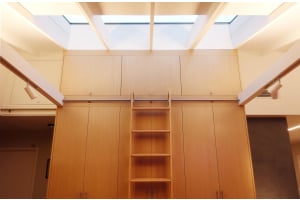
This is why light oak wood veneer cabinet doors remain the most historically accurate material choice for mid century modern cabinetry. The grain in real oak veneer, the fine parallel lines interrupted by natural ray flecks and occasional variation in tone, is something no manufactured surface fully replicates at close range.
LINK: 'light oak wood veneer cabinet doors' -> /cabinet-doors-light-oak
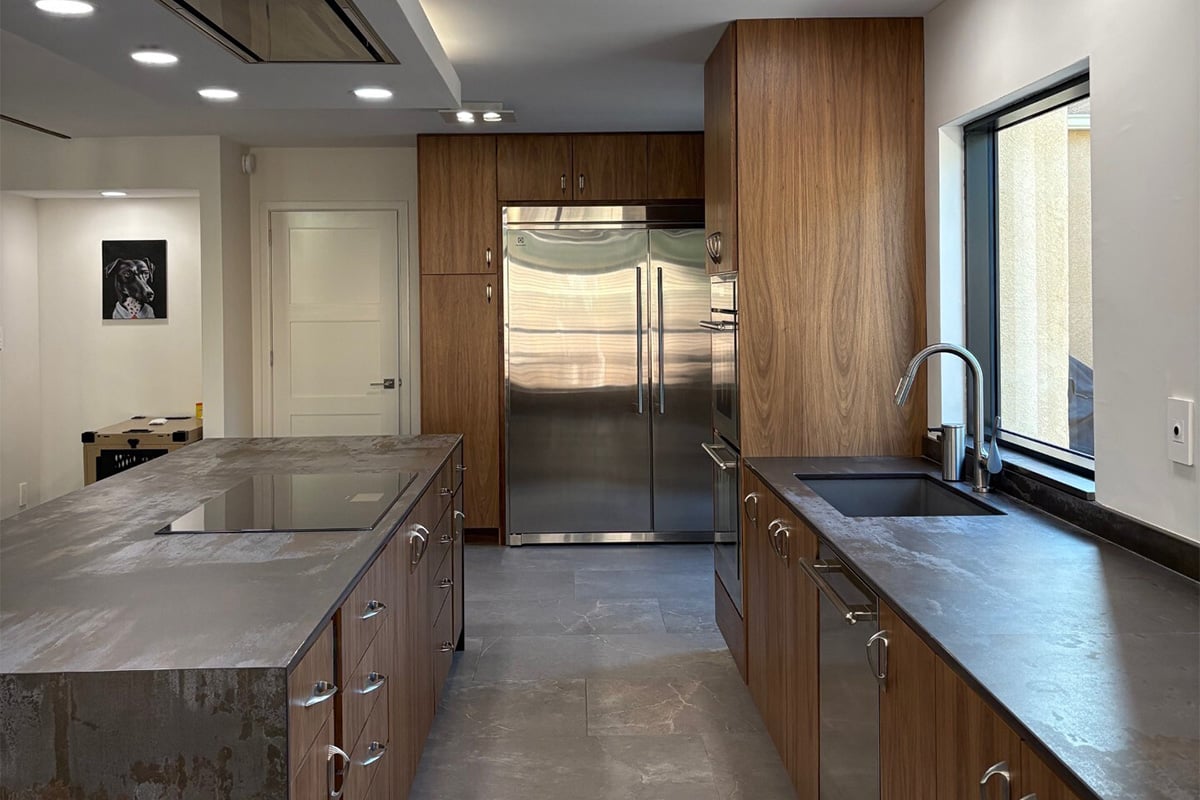
Wood veneer also allows consistent grain direction across a large surface. A floor-to-ceiling cabinet wall can be specified with doors where the grain runs in the same direction across every panel, producing a continuity that makes the cabinetry read as a single designed element rather than a collection of individual pieces.
Solid Core Wood Doors: A More Substantial Feel
Mid-century homes often feature materials chosen for quality of experience as much as visual appearance. Interior doors in the original mid century modern homes were typically solid core, with a dense inner construction covered with a veneer face on both sides. Solid core wood doors have a more substantial feel when moved and sound quieter when closed. These qualities signal construction quality in a way that hollow-core doors cannot.
For cabinet doors, the equivalent is a composite substrate that provides the stability and flatness needed for a large slab panel. Solid timber is not appropriate for flat slab cabinet doors because it expands and contracts with changes in humidity, and a large flat panel in solid wood would warp across a normal annual cycle. MDF or particleboard gives stability that solid wood cannot.
Glass in Mid Century Modern Design
Glass appears in mid century modern interiors in specific roles: as large sliding doors between interior spaces, as inserts in upper cabinet doors, and as room dividers that maintain sightlines while defining zones within an open plan. The use of glass is always about light and openness, not decoration.
For cabinet inserts, clear glass works in a display context where the objects inside are part of the design. Reeded or fluted glass, which diffuses rather than obscures, works when the goal is to suggest storage without fully revealing it. Both options work within the MCM aesthetic. Leaded, stained, or etched decorative glass does not.
The exterior doors of original mid century modern houses often incorporated large glass panels as a continuation of the indoor-outdoor relationship the architecture prioritized. Modern doors in an MCM renovation follow the same principle: maximum glass area, minimal frame, simple hardware.
Laminate and HPL as a Practical Modern Alternative
High pressure laminate, HPL, is the material behind most contemporary flat slab cabinet doors that are not wood veneer. It is produced by bonding multiple layers of resin-saturated paper under high heat and pressure. The result is a surface that is hard, durable, moisture-resistant, and consistent in color.
HPL is a legitimate material choice for mid century modern cabinetry, particularly where moisture resistance is a practical requirement. The surface textures available in HPL include matte solid colors that sit comfortably within the MCM palette. The flat slab door profile suits HPL well because there is no decorative detail on the face that would expose the difference between a manufactured surface and a natural one.
Door Hardware: Hinges, Knobs, and Handles
Hardware material matters as much as hardware form. Brushed nickel, matte black, and satin brass are the finishes that read most naturally alongside mid century modern doors and cabinets. Polished chrome can work but tends toward a more clinical contemporary look. Antique brass, oil-rubbed bronze, and any deliberately aged or patinated finish belong to different design traditions and create friction in an MCM interior.
Hinges in mid century modern cabinetry are typically concealed European-style hinges, which keep the face of the door completely clean. Knobs, where used, are simple discs or cylinders with no decorative profile. Locks on interior doors in mid century modern homes are typically simple lever or push-button mechanisms in a consistent finish to the other hardware.
Frequently Asked Questions
What materials does mid century modern design use?
Real wood veneer in oak, teak, and walnut, glass in large panels and inserts, matte painted surfaces in white and warm neutrals, and what were then new industrial materials including fiberglass, molded plastic, and aluminum. The common thread across all of these is honest presentation: each material looks like what it is rather than simulating something more expensive or more traditional.
What are most modern doors made of?
Most interior doors produced today use a hollow-core construction with an MDF or hardboard face. Cabinet doors are more varied: wood veneer over MDF, HPL over MDF, solid painted MDF, and thermofoil over MDF are all standard. The substrate is almost always a composite material rather than solid timber, for reasons of dimensional stability and cost. Solid core wood doors remain available as a quality upgrade.
Knowing which material is right for a replacement door project saves both time and money. Once the material is settled, the next decision is the door profile. The comparison between slab and shaker doors is where most people spend the most time before committing to a direction.